


When drying food, the issue is not just about drying, but drying without breaking down the internal structure. Many dried products warp, become hard, or crack due to excessive heat impacting the cellular structure.
The relationship between low temperature and cell structure has become a key factor in modern drying technology. With freeze dryers, water is removed slowly at low temperatures, cells are not subjected to thermal shock, and product tissue is preserved. This is why freeze dryers help products dry evenly while retaining their original shape, color, and value.

MỤC LỤC
Plant and animal cell structure from an applied biology perspective.
From an applied biology perspective, the cellular structure of plants and animals is not only fundamental knowledge but also directly determines how the material reacts to temperature during the drying process.
In plant cells, outside the cell membrane is a cellulose cell wall that acts as a mechanical support framework. Inside are large vacuoles containing water, minerals, and dissolved compounds. This high water content and turgor pressure help plant tissues maintain their natural tension, shape, and brittiness. When subjected to high temperatures, the rapid loss of water causes the cell wall to contract suddenly, leading to tissue collapse, structural rupture, and product deformation.
Meanwhile, animal cells lack a rigid cell wall, instead being surrounded by a cell membrane rich in proteins and lipids. This structure is softer and more elastic, but highly sensitive to heat. When temperatures rise, membrane proteins easily denature, losing their semipermeability and breaking down tissue bonds. As a result, meat, seafood, or animal-derived medicinal tissues are prone to significant shrinkage, dryness, and uneven dehydration.
From an application perspective, both plant and animal cells require a “biologically safe” temperature range during the drying process. Controlling the temperature at a low level allows water to escape slowly, preventing thermal shock to the cell structure, thereby preserving the morphology, porosity, and sensory value of the dried product.

The impact of high temperatures on cell structure – a cause of tissue breakdown.
When drying at high temperatures, the drying process is achieved more quickly, but this comes at the cost of serious damage to the cellular structure. This is the reason why many dried products shrink, crack, and significantly reduce their usability. Specifically, high temperatures affect tissues through the following mechanisms:
- Cellular heat shock: A sudden increase in temperature causes the proteins that make up the cell membrane to denature, disrupting its natural semipermeability.
- Excessive water loss: Water inside the cells evaporates too quickly, causing the cells to collapse suddenly and the tissue to lose its elasticity.
- Surface-core moisture difference: The outer layer dries and hardens prematurely while the inside remains moist, creating significant mechanical stress.
- Breakdown of connective tissue: Cell walls and connective tissue cannot adapt quickly enough, leading to cracking and structural damage.
- Product quality degradation: Products easily become hard, deformed, and lose their natural color and flavor.
These effects show that high temperatures not only dry out the raw materials but also collapse the cellular structure, making it difficult to restore the quality after drying.
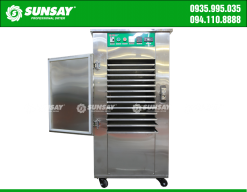
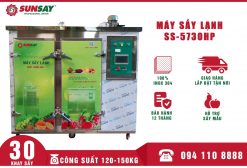
Heat pump food dryer SUNSAY!








The relationship between low temperature and cell structure: Tissue conservation mechanisms
At low temperatures, the drying process is no longer a “force-drying” process using heat, but rather a controlled biological adaptation of the cellular structure. When the temperature is maintained within a safe range, biochemical reactions inside the cells slow down, and proteins and enzymes do not undergo sudden denaturation. As a result, the cell membrane retains its semipermeability, allowing water to escape slowly instead of being expelled rapidly as when drying at high temperatures.
This moisture release mechanism allows free water to leave the tissue first, while bound water attached to the cell structure is gradually released over time. This balance maintains a stable turgor pressure, limiting shrinkage and collapse of the cell framework. Simultaneously, the cell walls and connective tissue have sufficient time to slightly expand and contract, preserving the product’s natural shape and porosity.
The close relationship between low temperature and cell structure has created an effective tissue preservation mechanism. The dried product does not crack or harden, and its color and flavor are preserved close to the original state. This is the scientific basis explaining why low-temperature controlled drying technologies, especially freeze-drying, consistently produce high-quality products with superior value compared to traditional heat drying.

Why don’t freeze dryers break down product tissue?
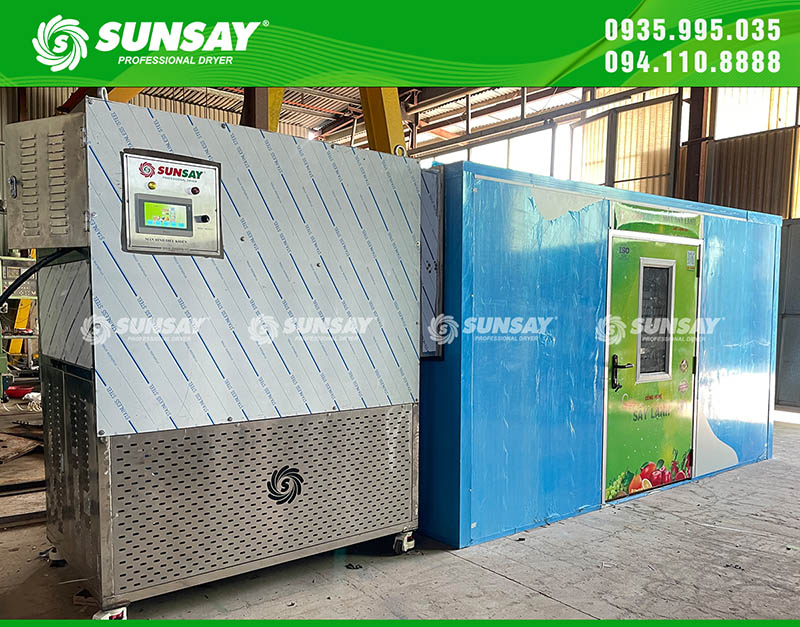
Heat pump food dryer do not break down product tissues because the entire dehumidification process is carried out within a low, stable temperature range that is suitable for the biological structure of cells. At this temperature, cells are not subjected to thermal shock, membrane proteins are not denatured, and thus the cell membrane retains its natural semipermeability. Water inside the tissue escapes through slow, controlled diffusion, instead of massive evaporation as in heat drying.
Furthermore, the freeze dryer maintains a balance between temperature, humidity, and airflow, ensuring even moisture removal from the inside out. Free water is removed first, followed by bound water, minimizing moisture differences between the surface and core of the product. Because no significant mechanical stress is generated, the cell framework and connective tissue do not collapse or crack.
The combination of low temperature and controlled drying process allows cold dryers to dry products while preserving their tissue structure. As a result, the dried material retains its natural shape, porosity, color, and sensory value significantly better than drying methods using high temperatures.
The practical value of preserving cell structure during freeze-drying.
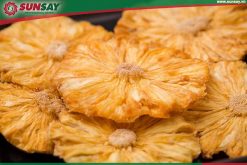
Preserving cell structure during freeze-drying offers significant practical value, not only in terms of product quality but also in economic efficiency. When the tissue structure remains intact, the dried product retains its natural shape, porosity, and uniform surface, minimizing warping, cracking, or hardening. This is especially important for thinly sliced products, leafy vegetables, medicinal herbs, or high-quality raw materials requiring a refined appearance.
Furthermore, the preservation of cell structure helps minimize the degradation of active ingredients, vitamins, and natural flavor compounds. Because it avoids thermal shock, the flavor isn’t “cooked,” the color doesn’t darken, and the product retains a sensory quality close to that of fresh ingredients. This is a key factor enabling freeze-dried products to meet the stringent standards of premium foods, functional ingredients, and export markets.
From an economic perspective, preserving tissue structure reduces losses, increases the percentage of high-quality finished products, and enhances selling prices. Freeze-dried products are typically positioned in a higher-value segment compared to traditional heat-dried products. Thus, preserving cell structure is not only a technical advantage but also a foundation for upgrading products and optimizing investment efficiency in agricultural and food processing.

Contact us for advice and quote
With over 15 years of experience and a commitment to innovation, SUNSAY is a leading manufacturer in the agricultural dryer industry. We provide superior quality dryers at competitive prices, ideal for improving the quality of agricultural products.
SUNSAY is committed to providing customers with agricultural dryers of superior quality. Our dedication to research and technology development helps us create effective drying solutions, ensuring the quality, color and flavor of agricultural products are preserved.
For detailed advice, please visit the website: dryer.com.vn or contact the Hotline (Zalo): 0935 995 035 or call the switchboard: 094 110 8888 for support.
Detailed information about the dryer will be updated during the consultation and discussion process. Therefore, do not hesitate to contact us immediately!


